
The Course:
Challenge-Based Innovation course developed with IdeaSquare, the Innovation Space at CERN (The European Center for Nuclear Research) as a joint educational project with EU’s ATTRACT and the UN’s Solution Space focused on translating deep tech into everyday applications addressing Sustainable Development Goal 3: Good Health and Wellbeing.
Pratt Institutes’ student team joined a cohort of 4 international, multidisciplinary student groups for a 2-week workshop at CERN as part of a 6-month course wherein students developed socially-impactful applications from emerging technology.
Presented is the outcome of the first semester, after which students developed independent capstone projects.
Student project by Ridima Jain and Charlotte Böhning with Dr. Helio Takai and Mary Lempres. In my role, I piloted this program at Pratt Institute: securing funding and institutional support, facilitating workshops, coursework, partnerships, and design development.
PHASE 1
Challenge-Based Innovation at CERN
Technology Foundation
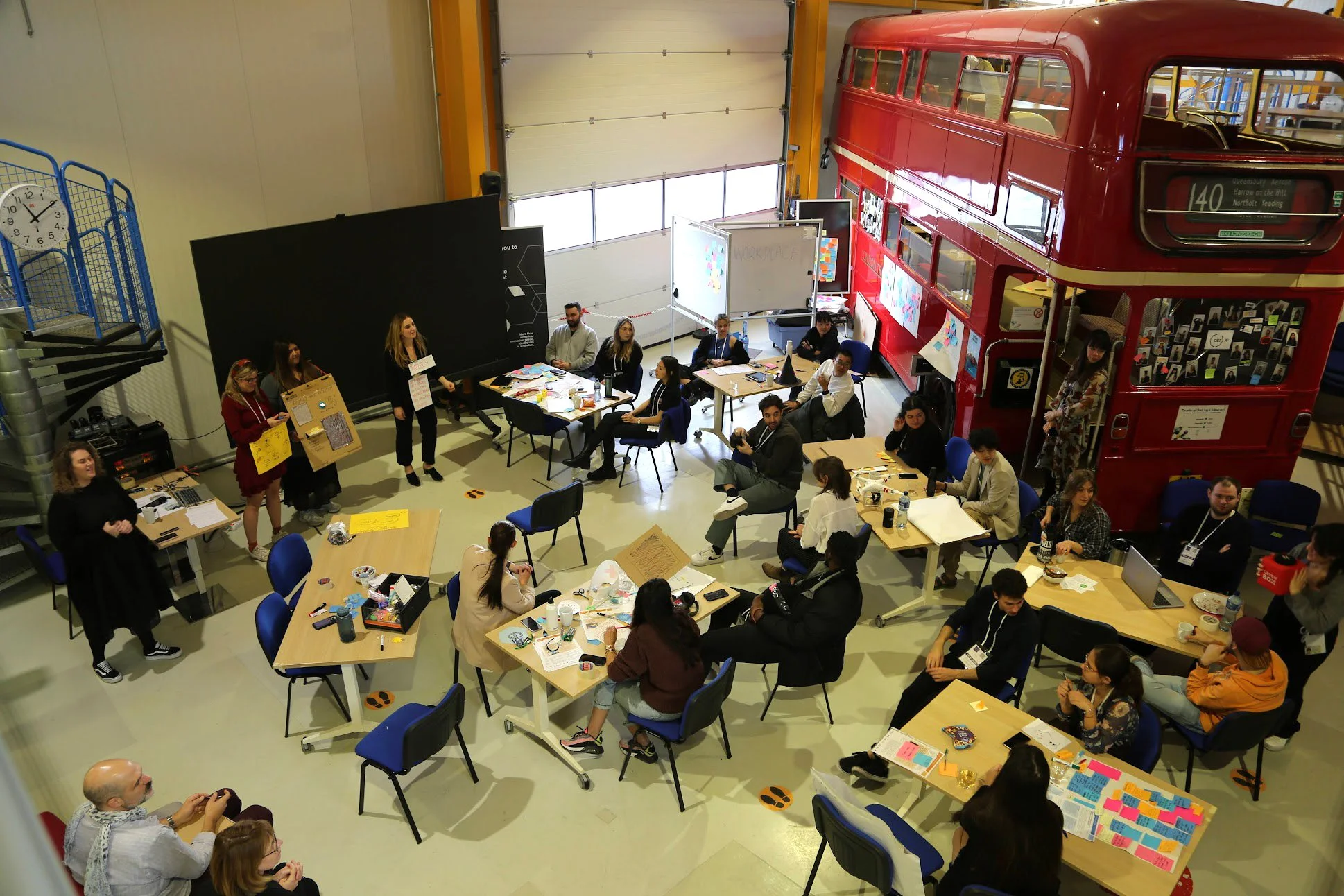
A 2-week design-driven innovation course preparing university students to develop projects that solve complex societal problems, inspired by technological ideas that come from instrumentation development or basic research at CERN. Student teams worked with CERN for the purpose of making disruptive innovation for societal impact.
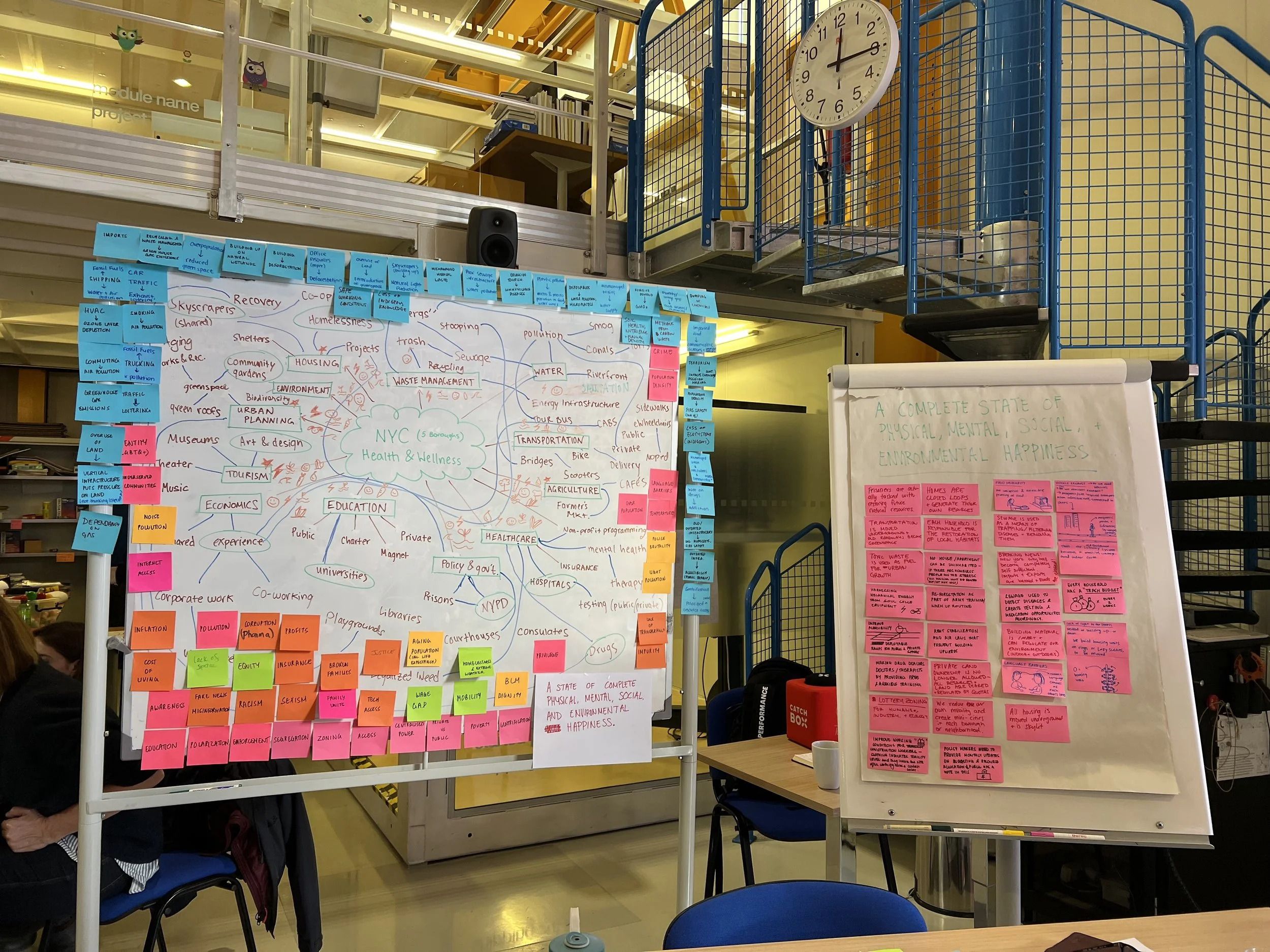
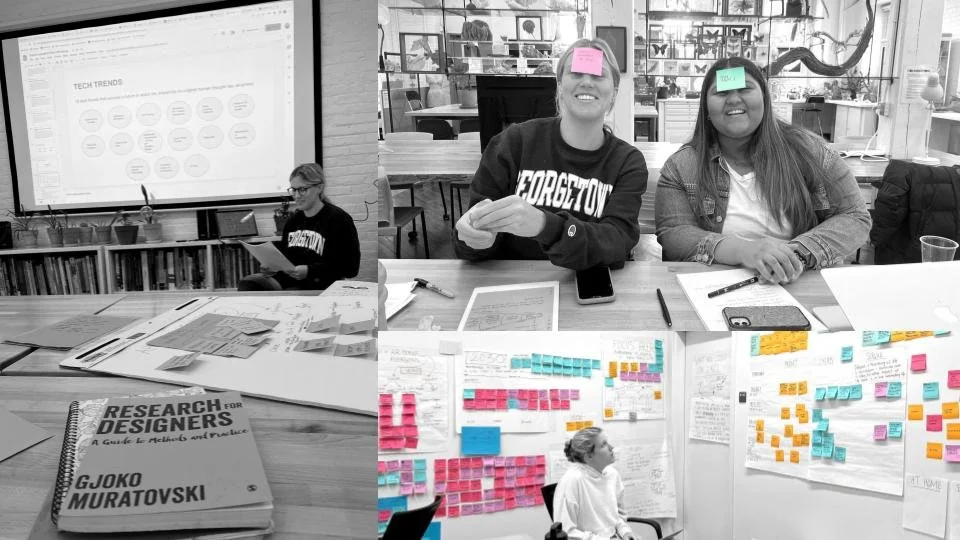
Speculation, Systems Mapping, Contextualizing Innovation
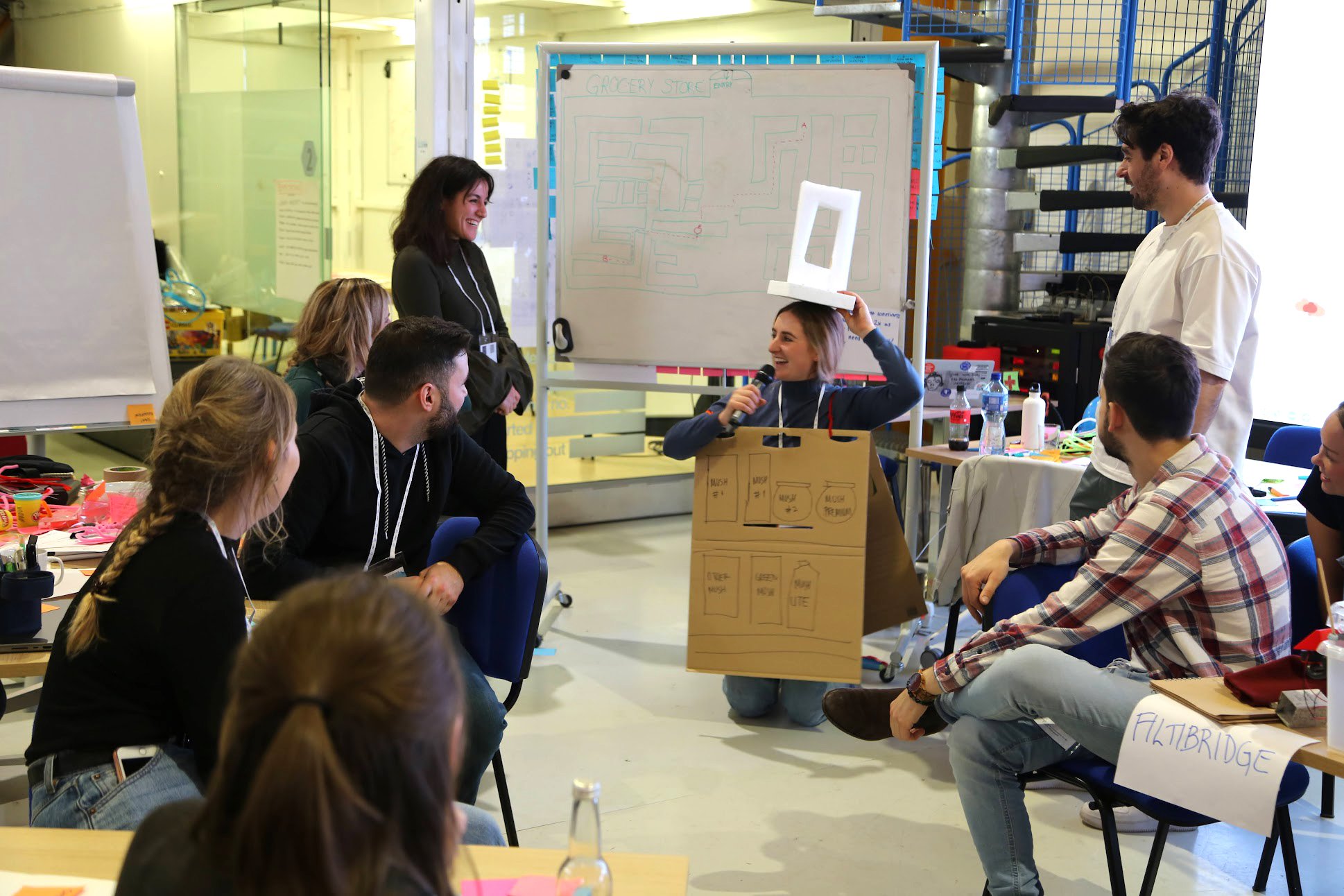
Experimental Learning, Rapid Prototyping with Deep Technology
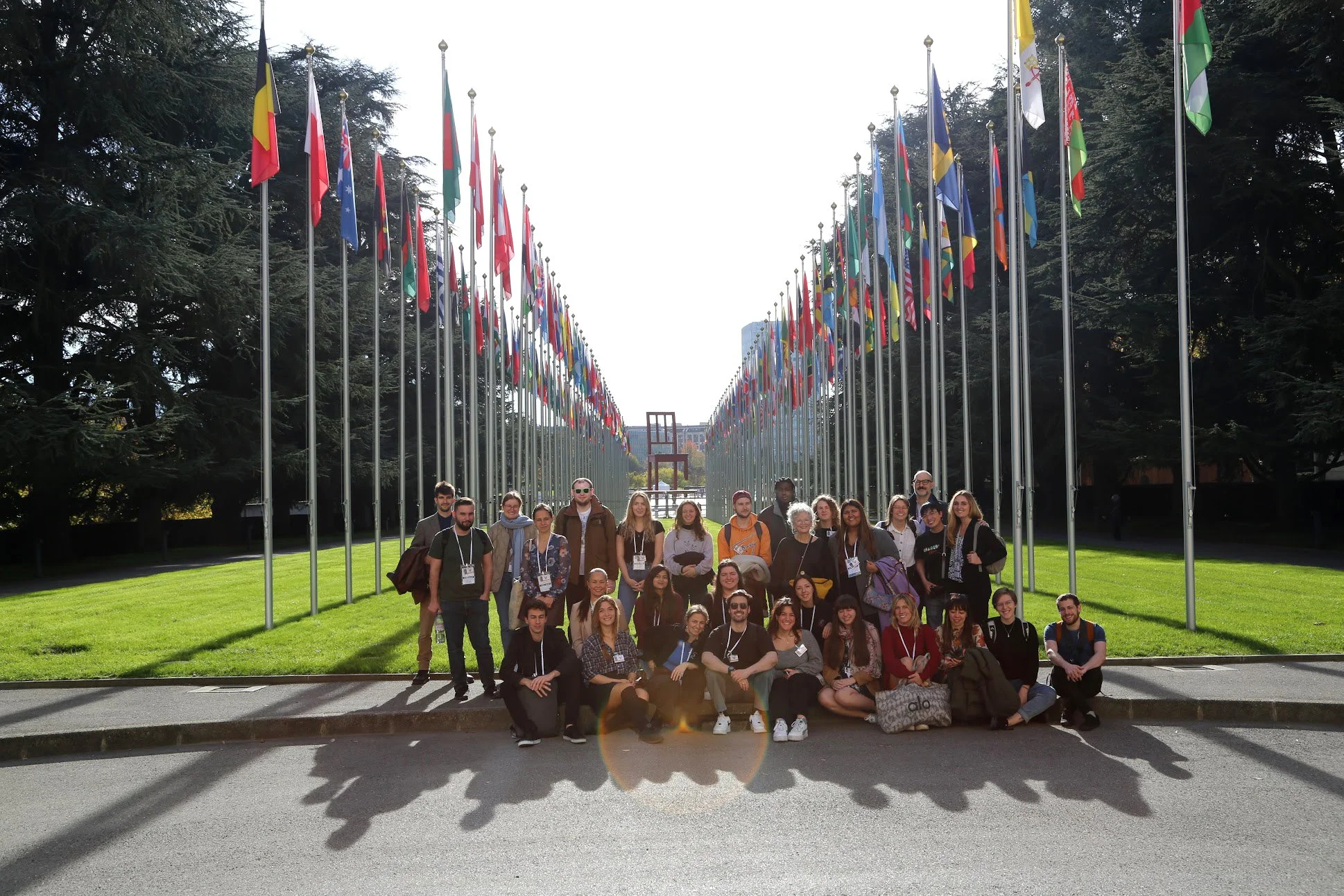
Opportunity Definition with UN Solutions Lab
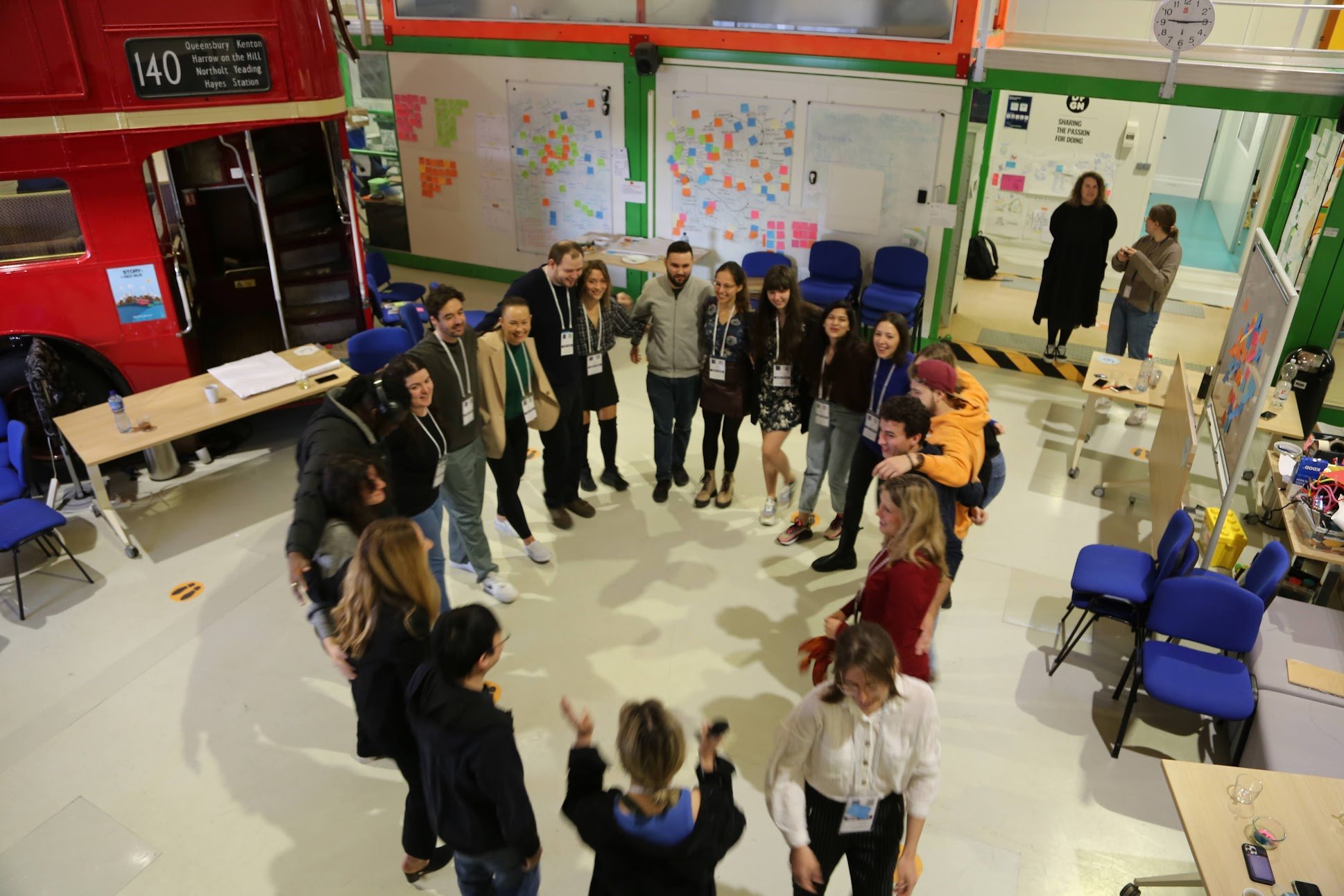
Team Building
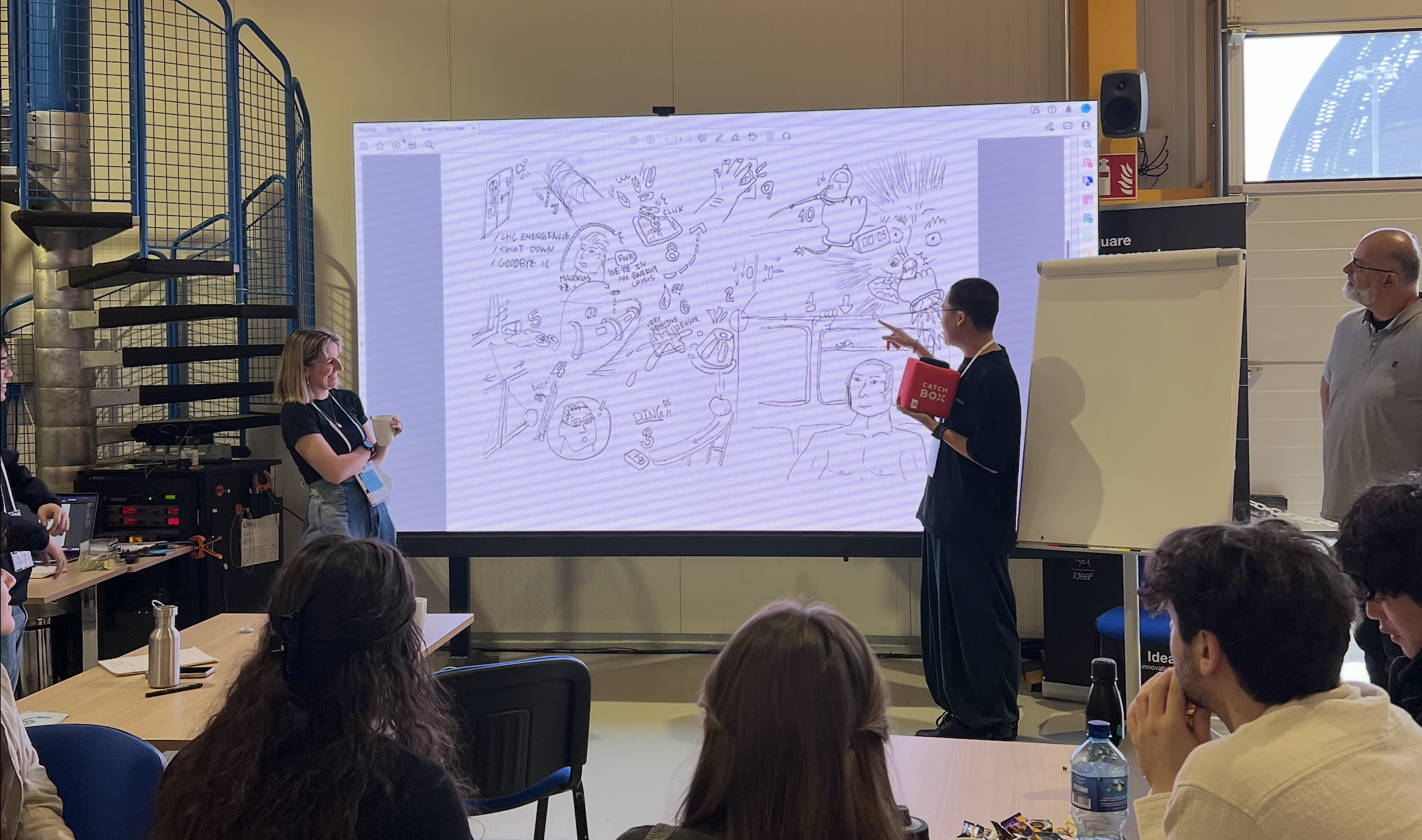
Presenting and Communicating Ideas

Idea Generation
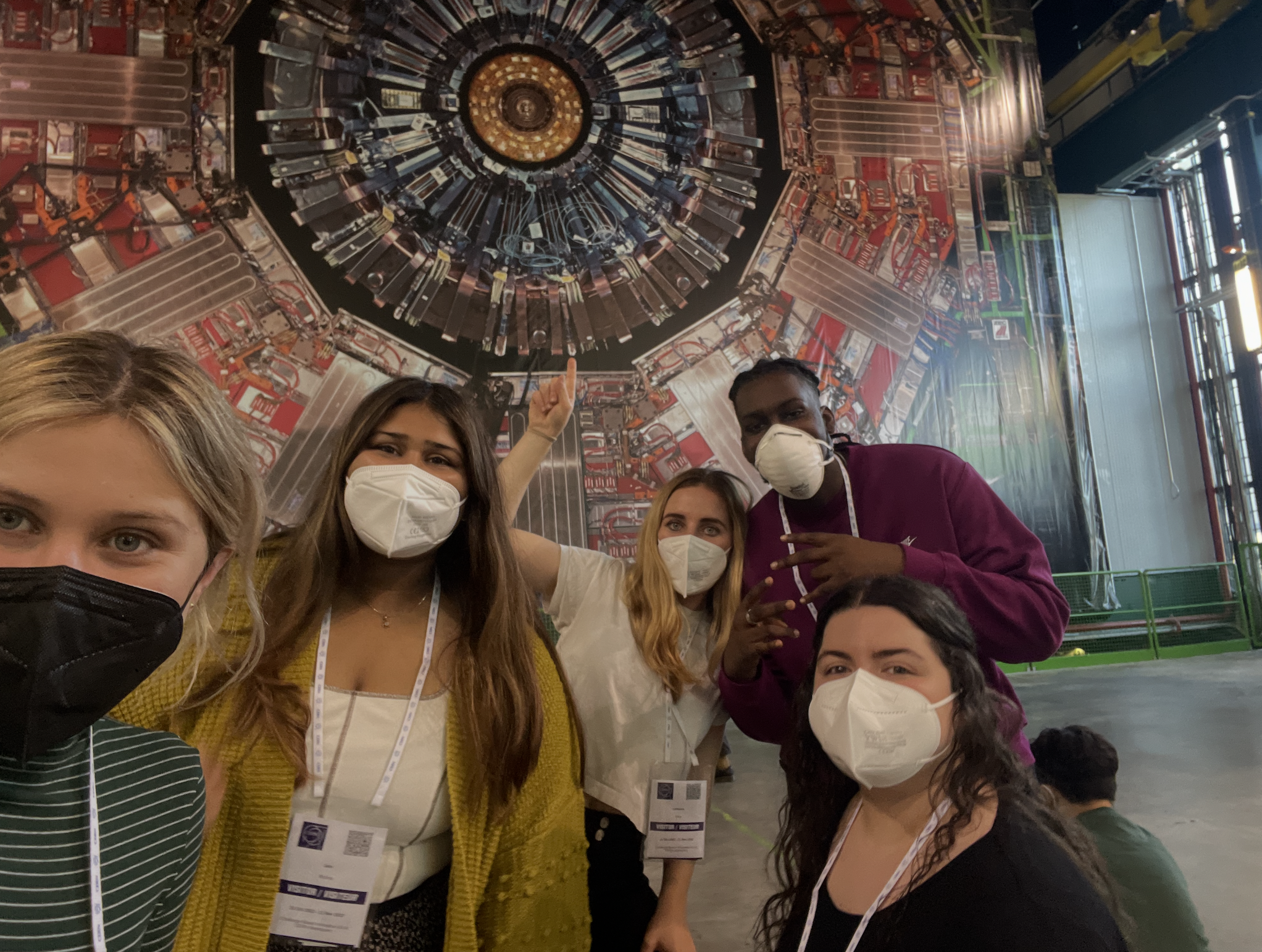
First Hand Exposure to Research
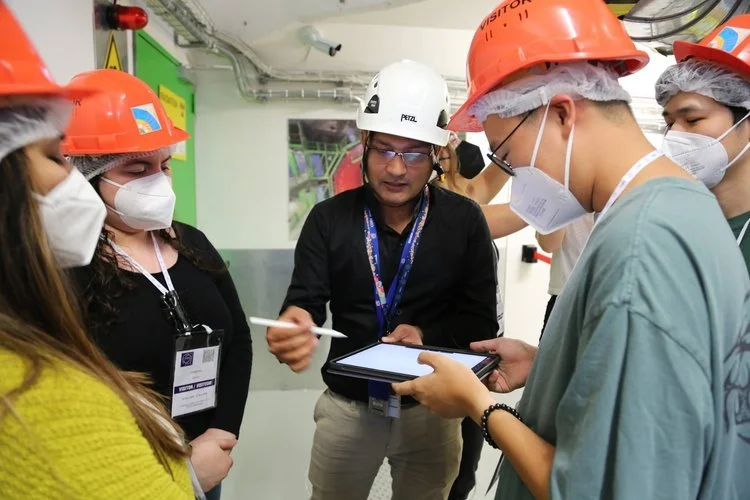
Direct Expert Access
PHASE 2
Applying Design Thinking to Our Local Context In NYC
Challenge Definition with Local Stakeholders
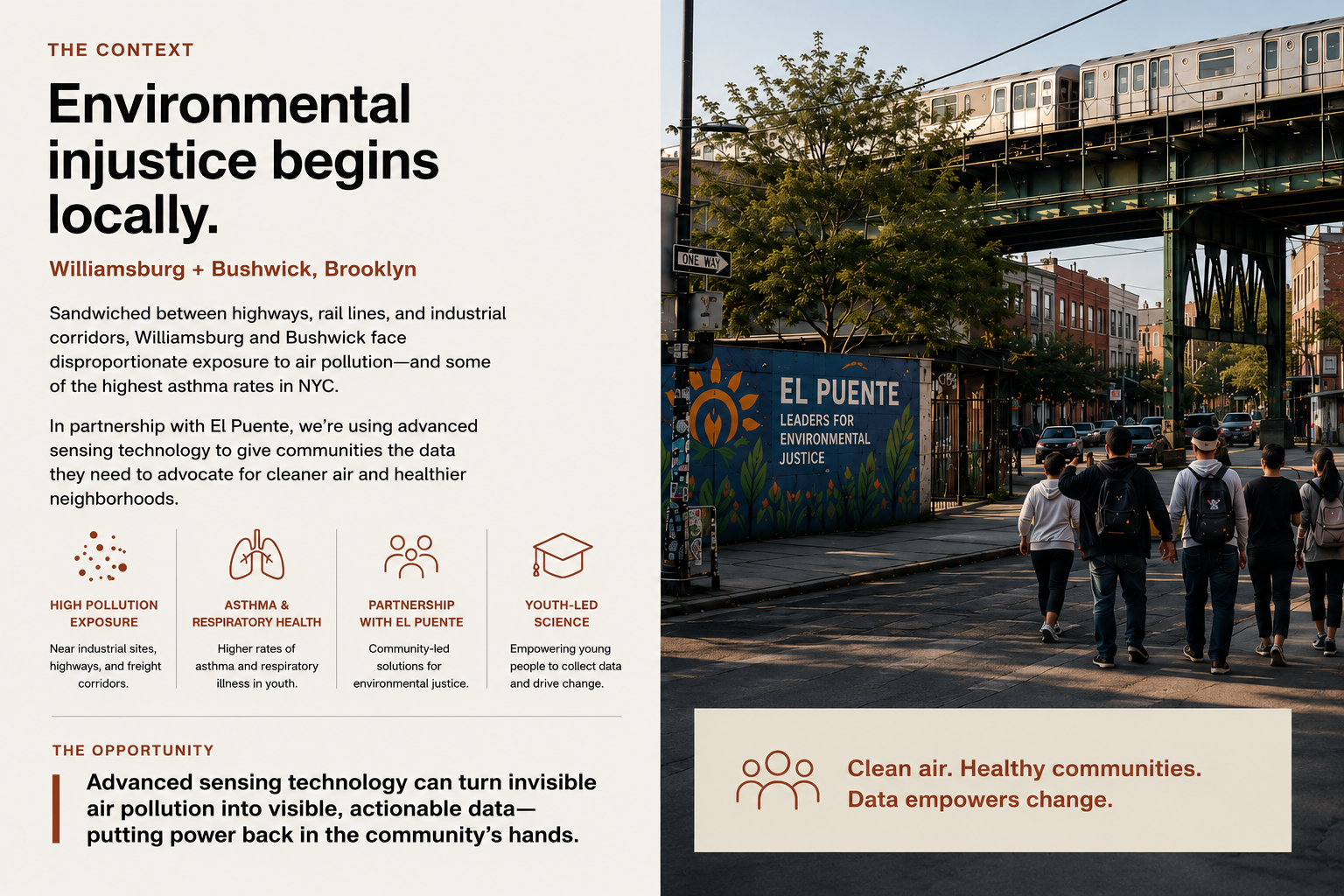
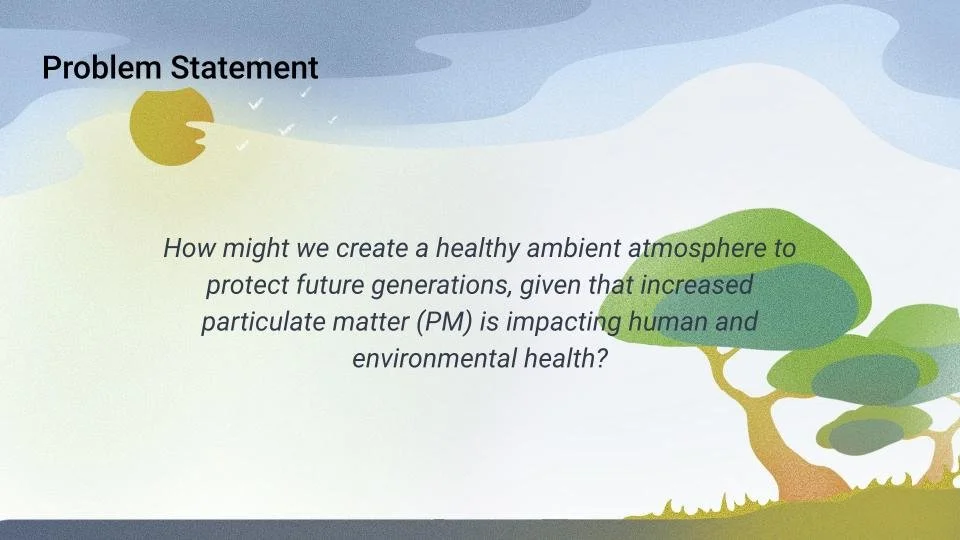
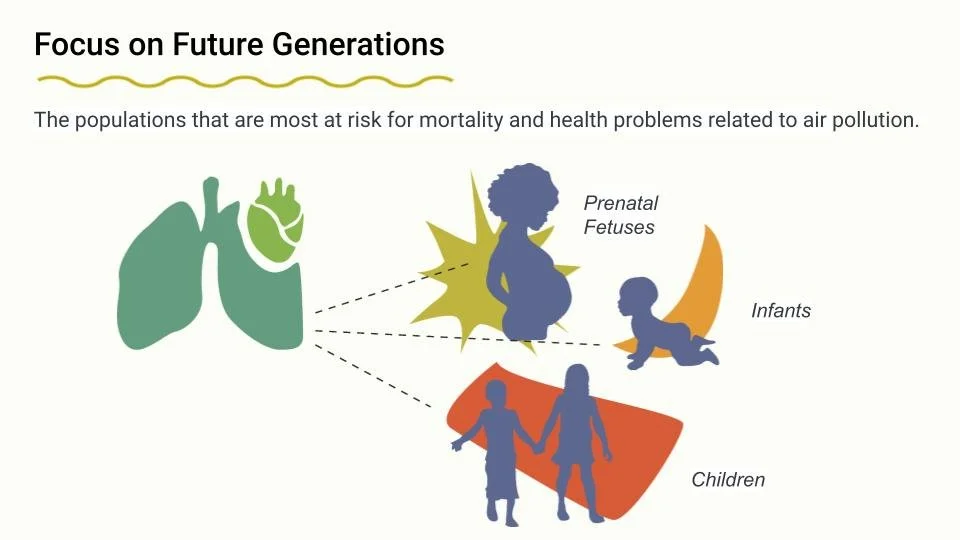
Working directly with El Puente, a community justice organization, we moved from the “big problem” of human health and wellbeing to a concrete and actionable challenge. South Williamsburg residents have the highest rates of asthma and COVID-related deaths in NYC due to air pollution. Playgrounds and schools are located directly under traffic routes, where children, the most predisposed to air pollution impacts, are breathing in invisible pollution while they play. The community asked for a accessible tool that can be used to monitor specific air quality sources to petition for healthy public spaces, particularly for children.
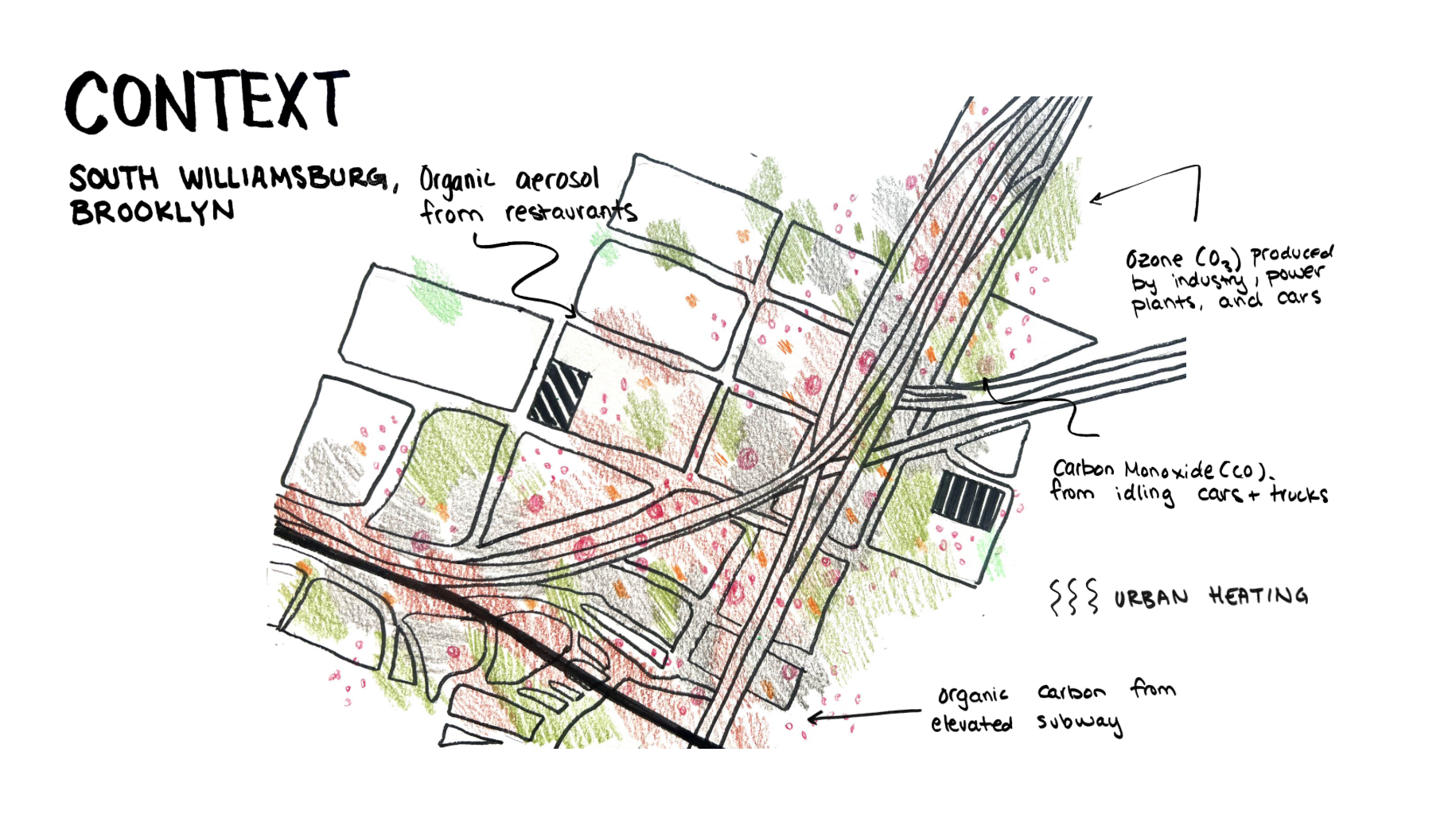
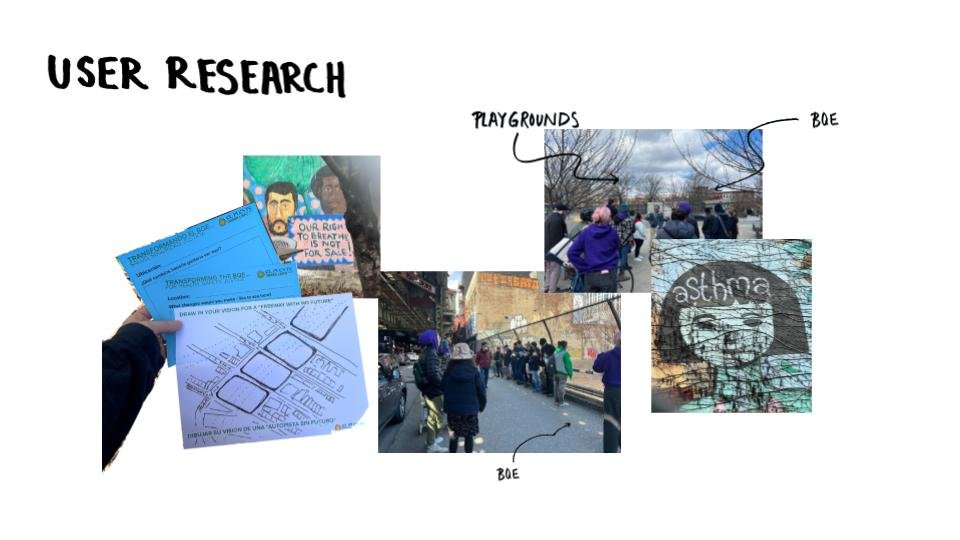

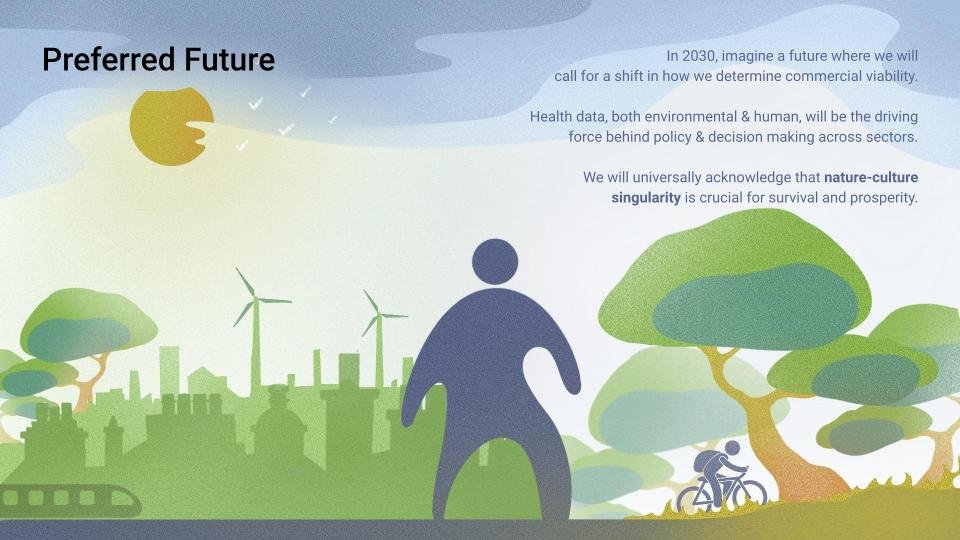
Problem definition from ethnography: walking the streets with community members, identifying problem sources, co-design of a preferred future and project outcomes.

Technology Identification
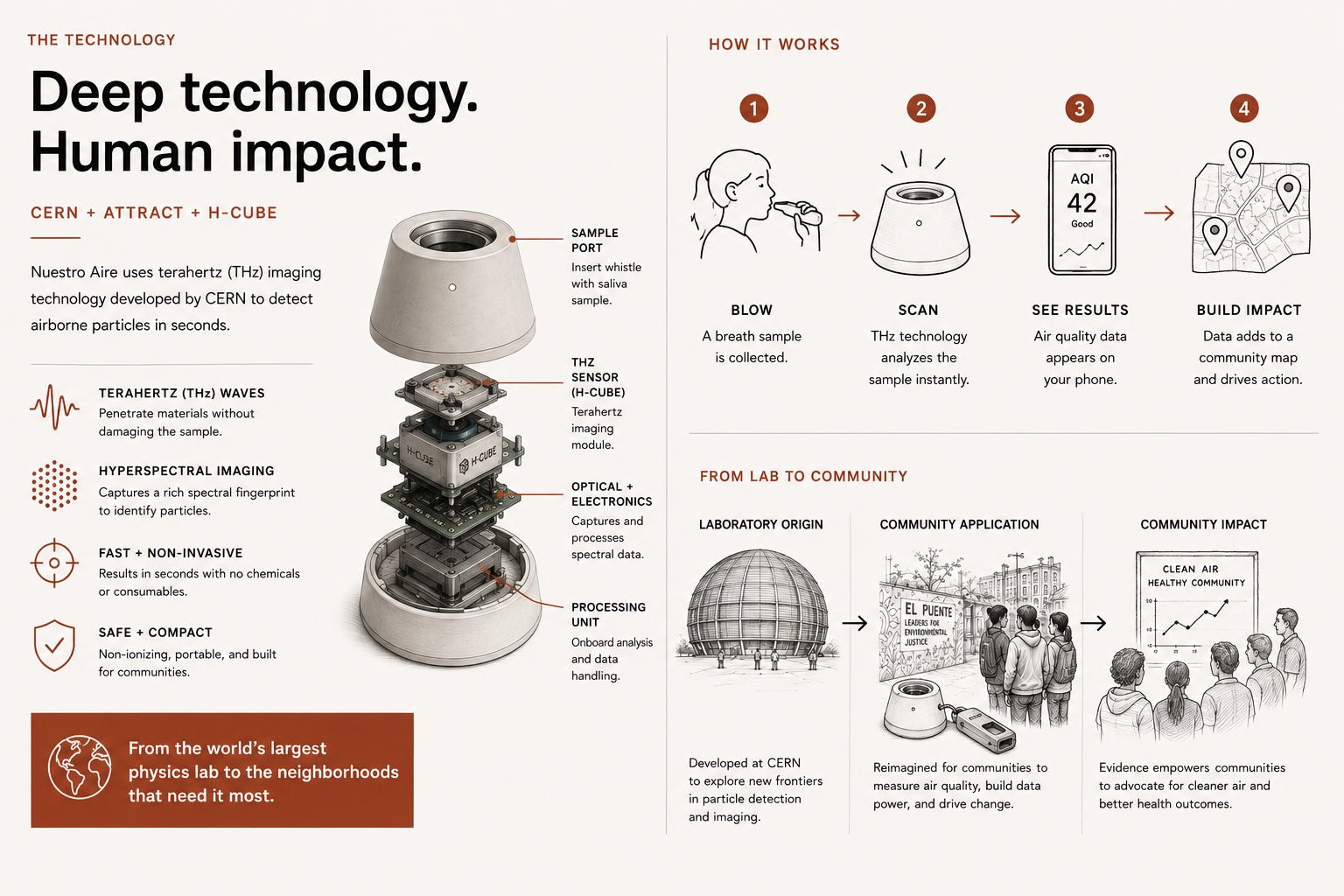
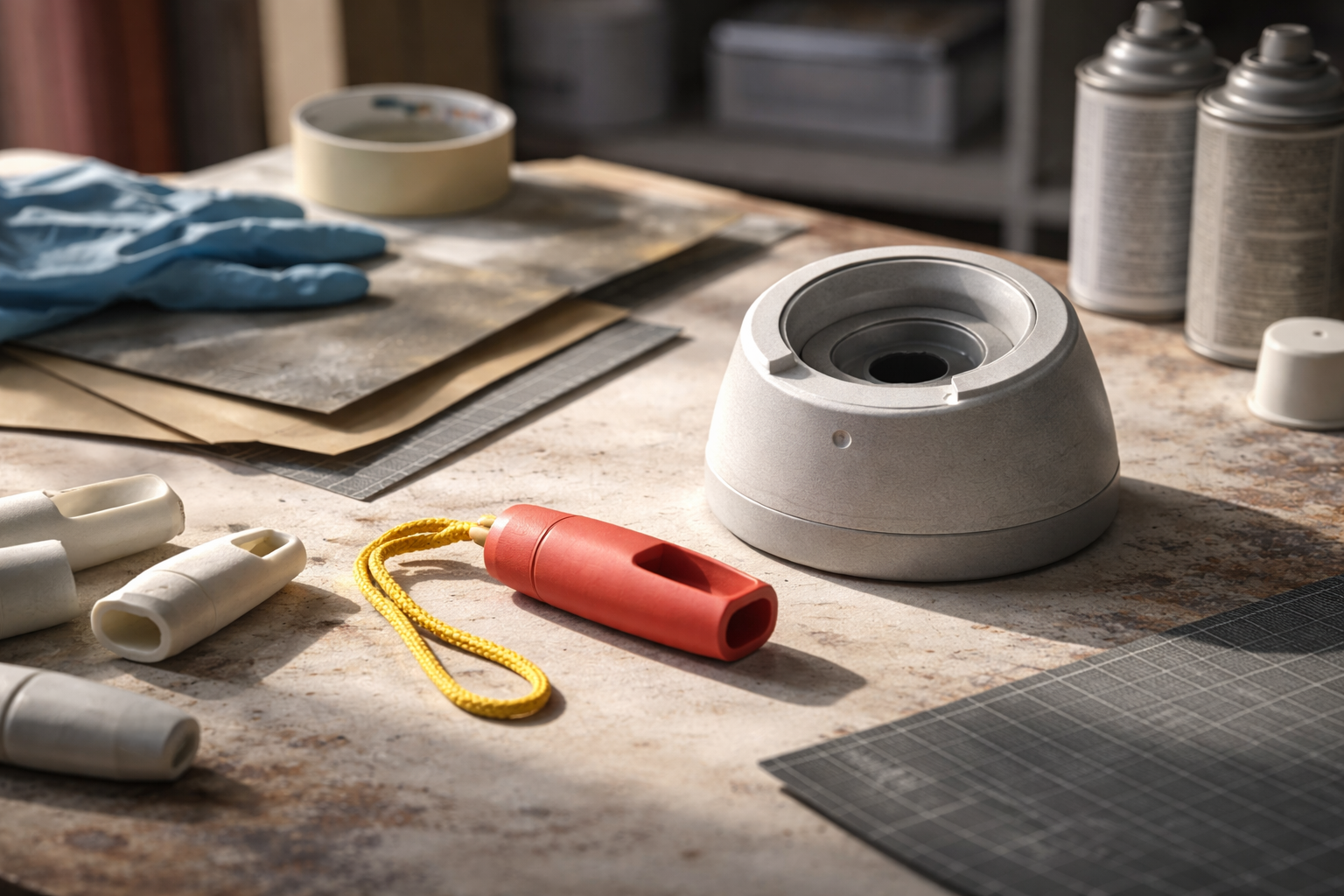
Through feasibility filtering, we narrowed down possible imaging and detection technology from those investigated at CERN based on strategic alignment, technical prototypability, and scaling potential. H-cube addresses the emerging need for low-cost, portable solutions for hyperspectral imaging in the terahertz (THz) region of the electromagnetic spectrum. The fabrication processes are extremely simple, cost-effective, and suitable for the production of large arrays.
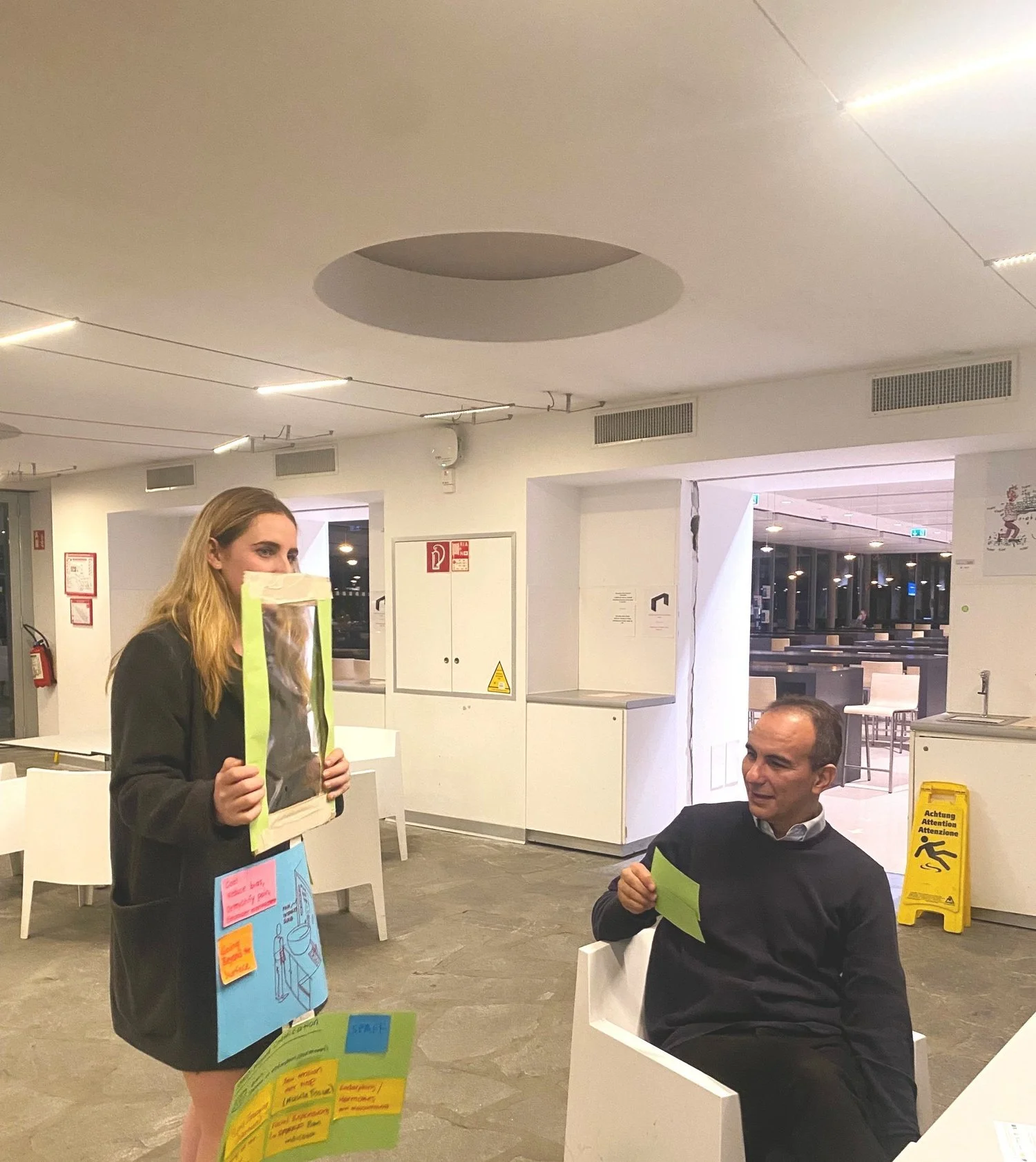
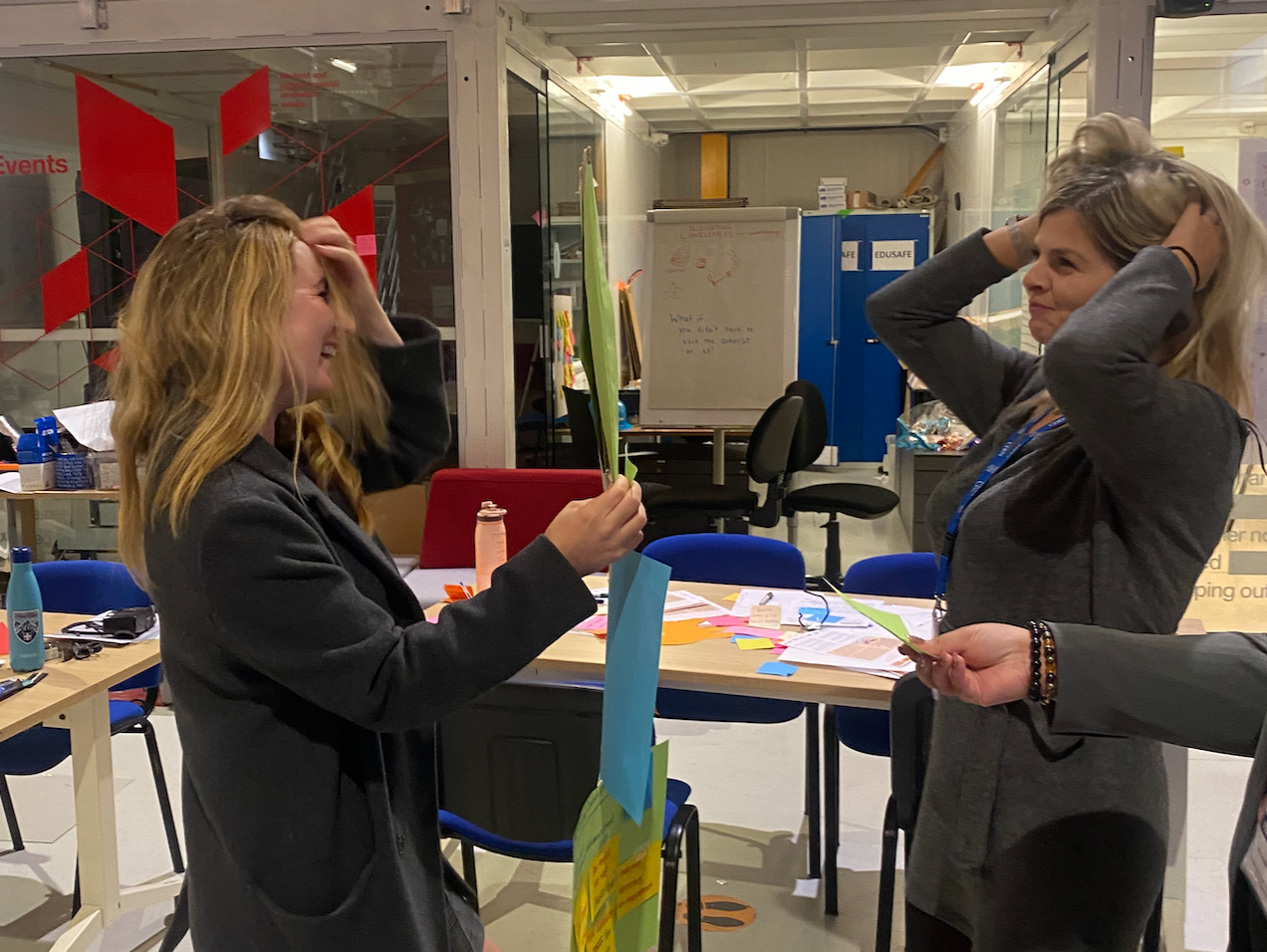
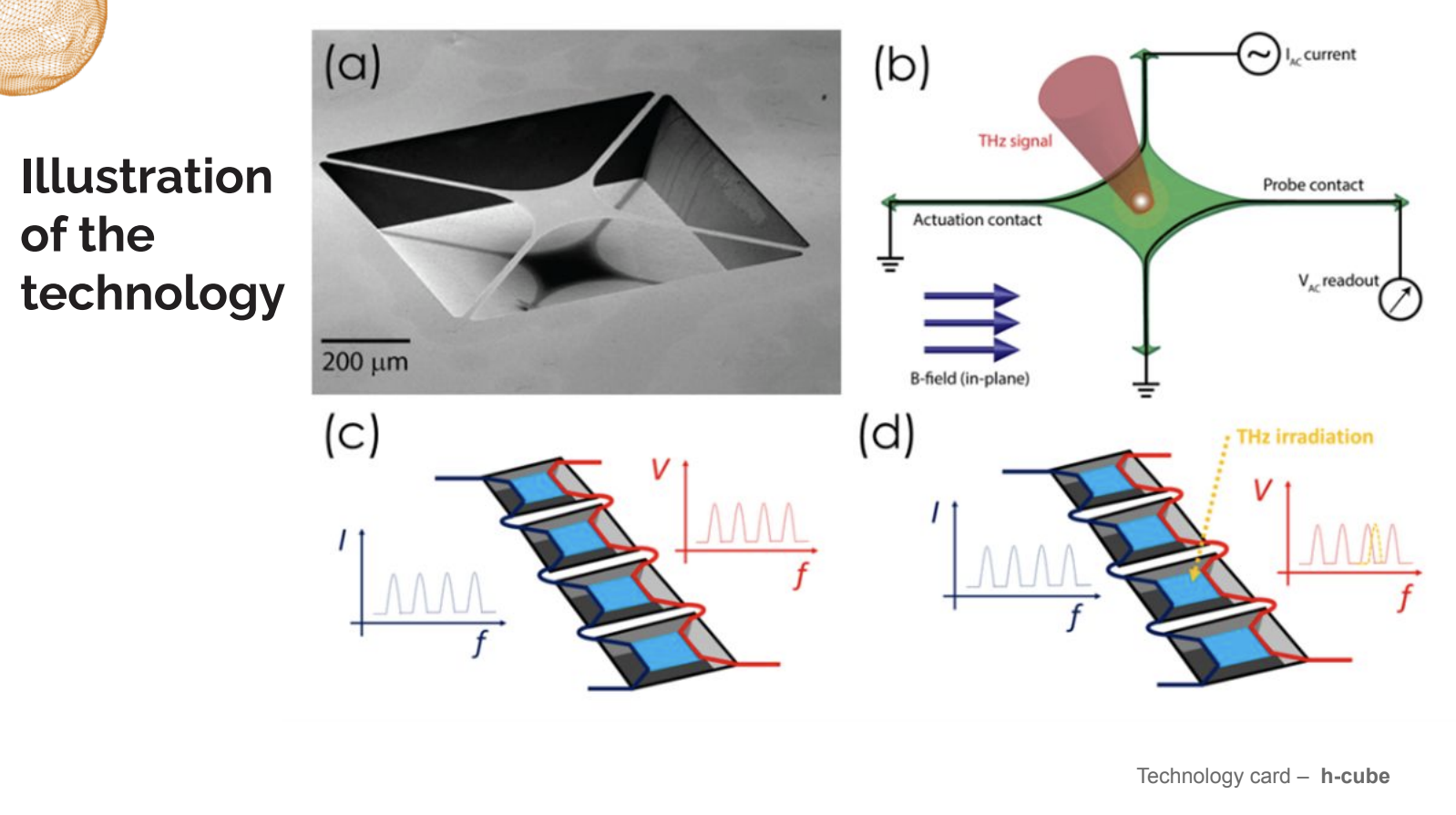

Technology was evaluated using Technology Scouting (push) from research centers identifying early-stage instrumentaiton, sensors, and data processing methods and Need Identification (pull) from deep ethnographic research to identify the paint points in our social sector. We developed proof of concept models to visualize the basic interaction with technology, and met with the technology “owners” (scientists) to ensure we weren’t violating the laws of physics or the tech's actual capabilities.

Field Testing
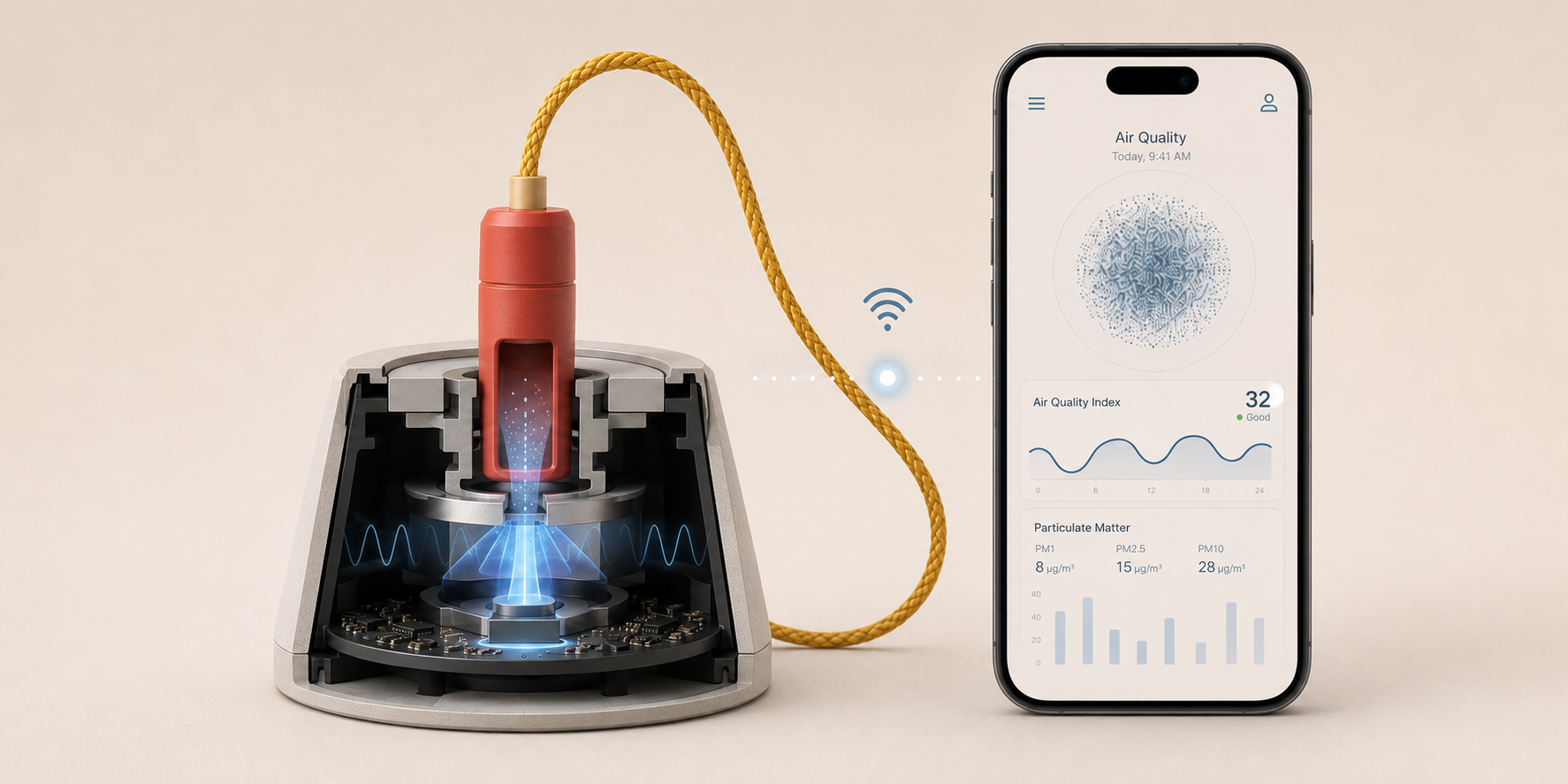
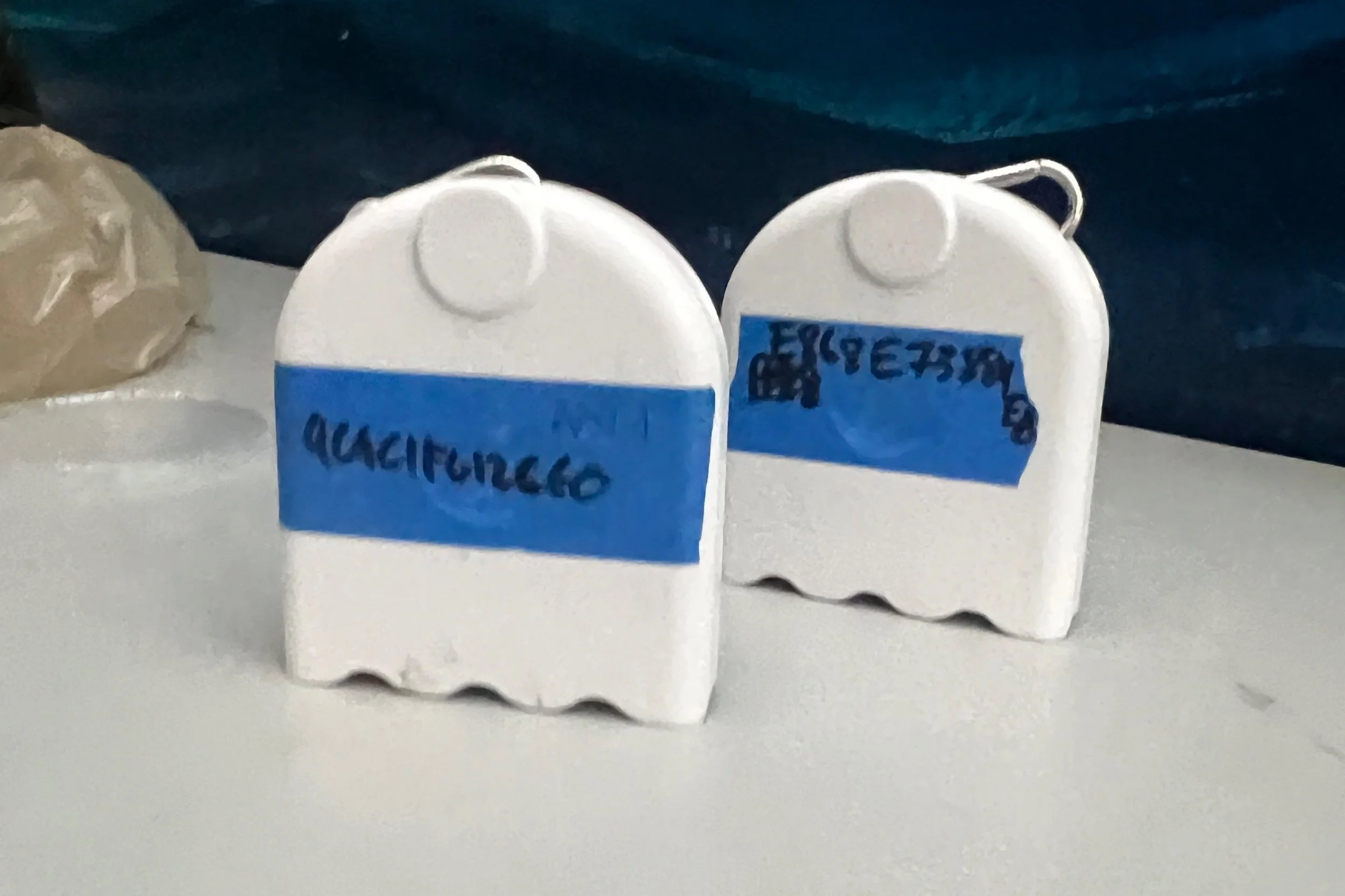
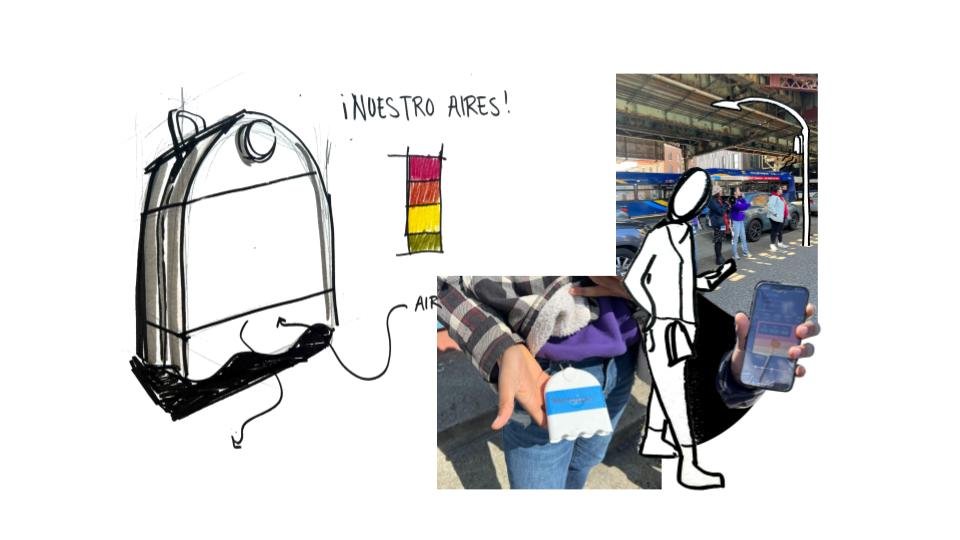
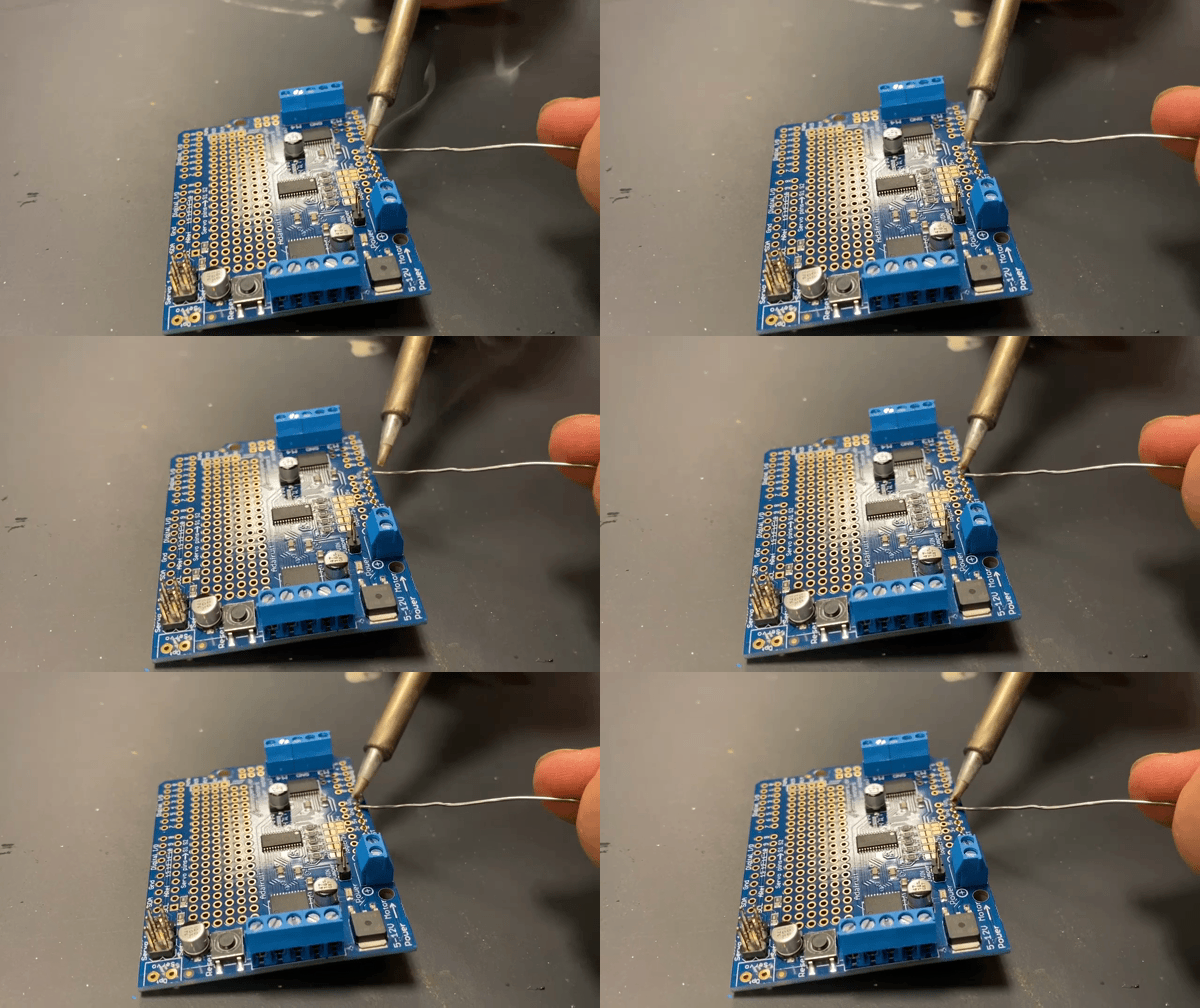
Moving quickly from idea to testable solution, we built works-like prototypes for volunteers to test in their everyday life. El Puente distributed wearable devices containing basic sensors to community volunteers. The sensors were linked to a app design that tracked and monitored basic air quality data linked to satellite location.
These first prototypes and the interaction with them helped us understand how an advanced sensing and imaging system would work in the real world.
The Iterative Prototyping Loop
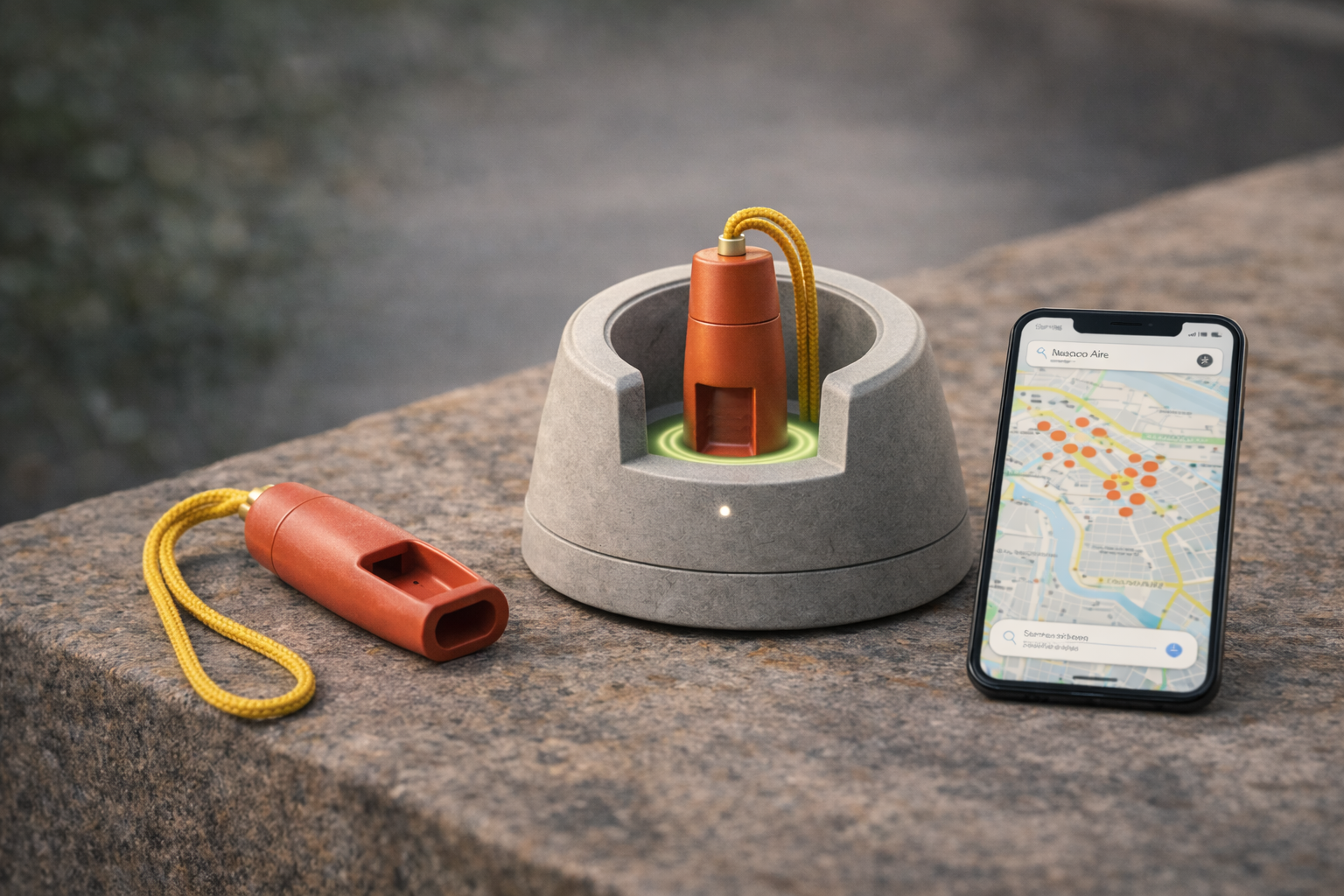
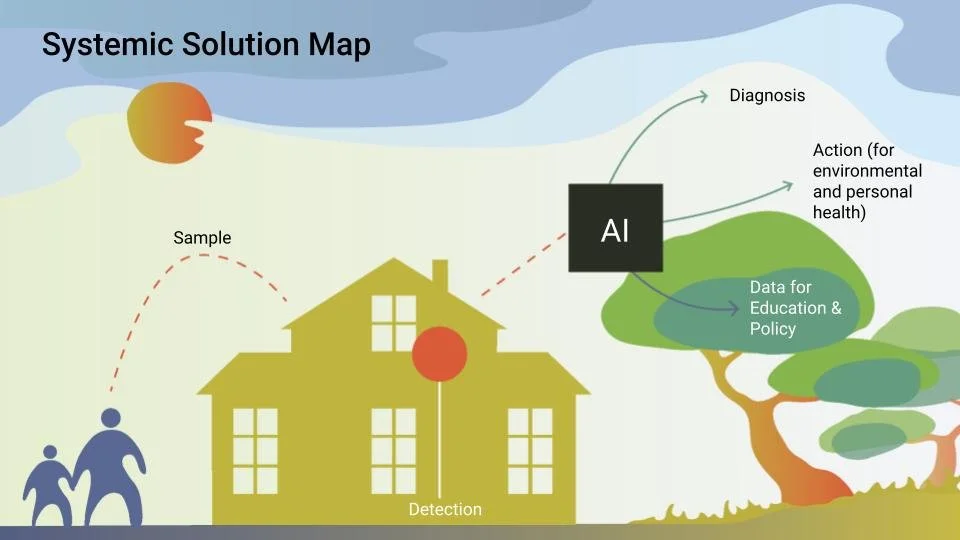
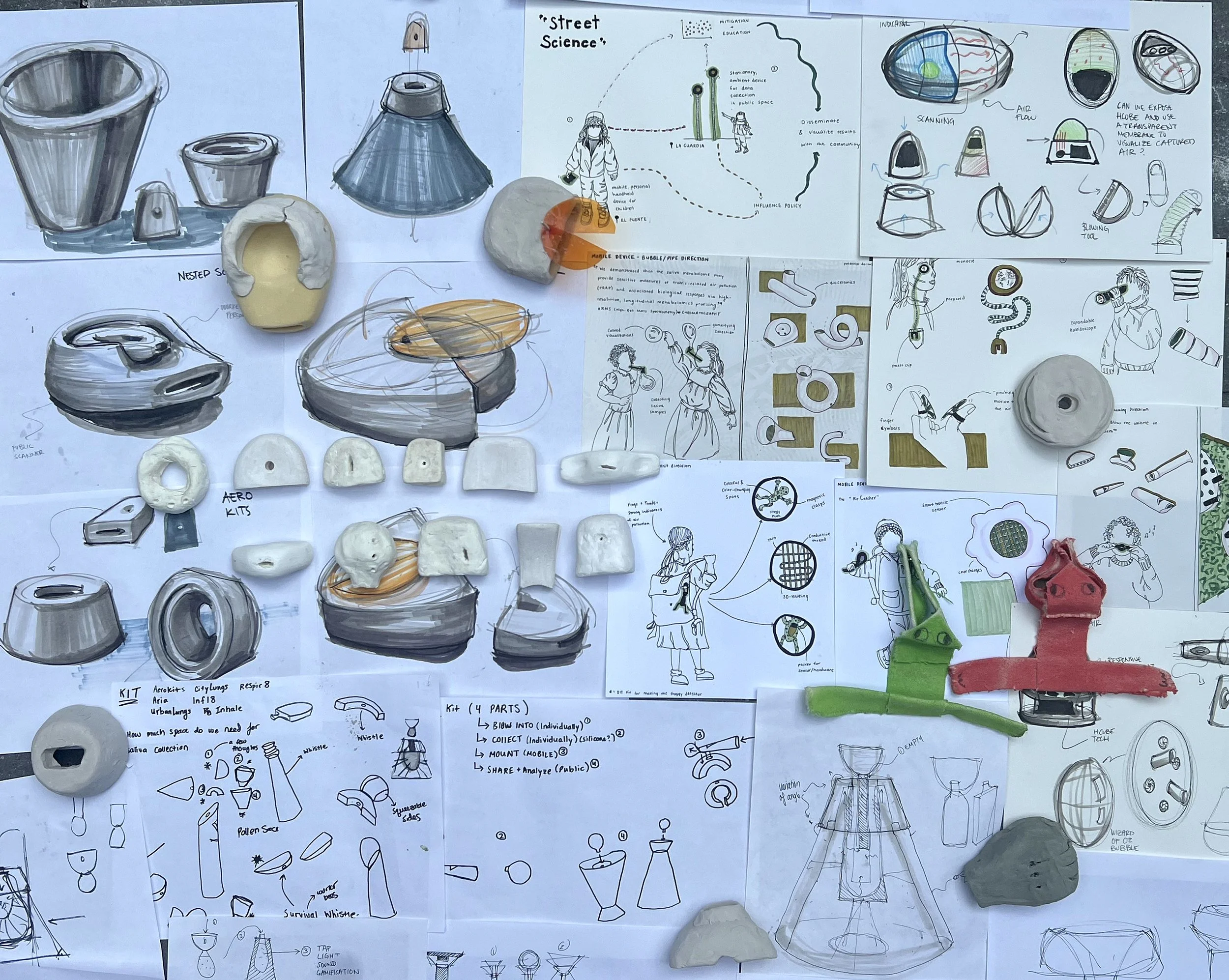
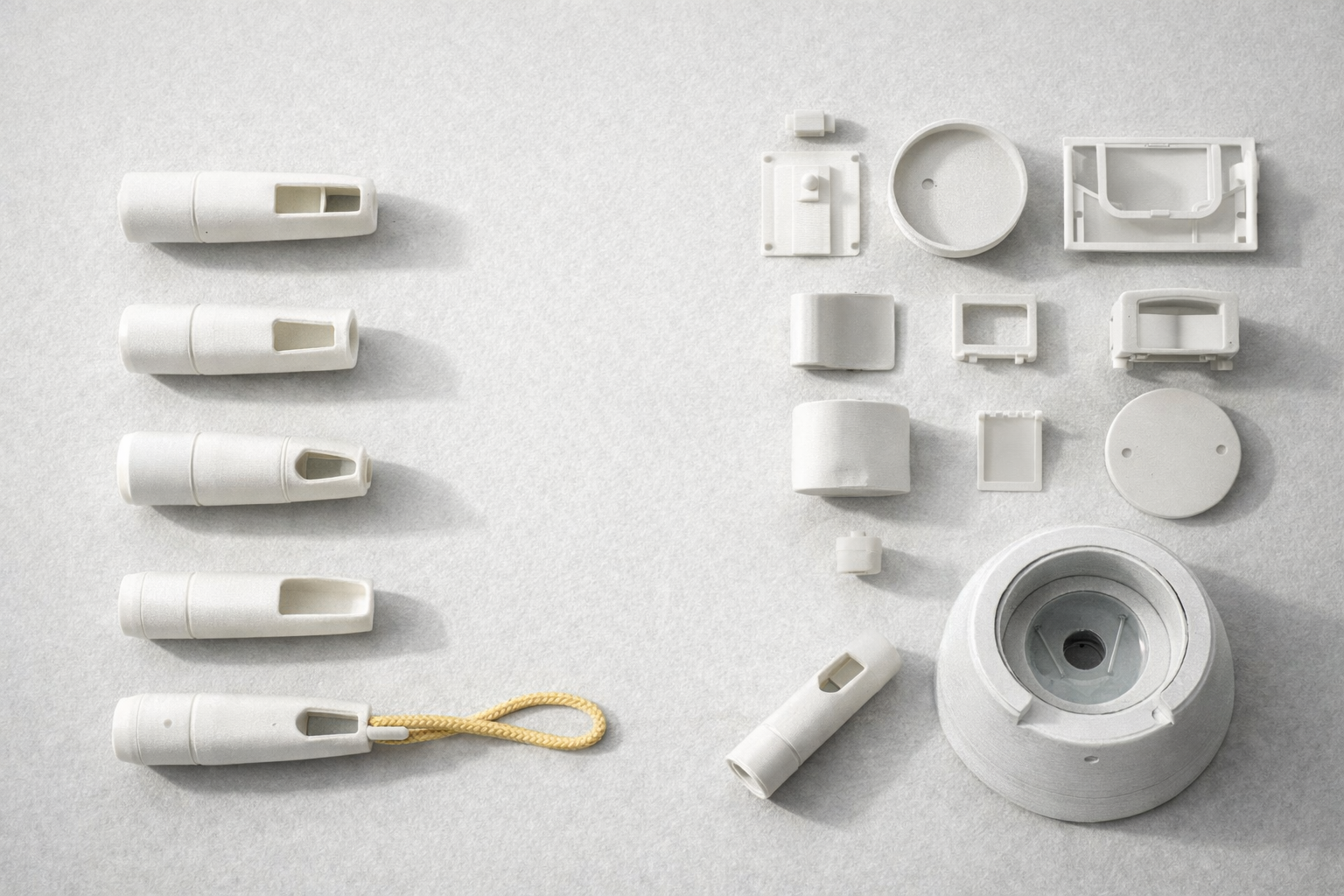
Learning through testing human interaction, we rapidly prototypes design solutions for how to engage children actively in the sample collection. We learned that, rather than creating a high-tech, passive wearable, participants wanted a low-cost, low-tech interactive tool that volunteers could take to the streets in mass and return to El Puente to scan. This meant we were developing a system comprised of a accessible, wearable method for sampling invisible pollution, a high-tech scanning device, and a dynamic pollution mapping platform.

Demo Day Presentation
While typical environmental sensors only measure broad categories like "total particulates" (PM2.5), they cannot distinguish between the specific chemical origins of those particles. The H-Cube fills this gap by bringing research-grade Terahertz spectroscopy out of the lab and into the neighborhood. Its unique resonance-based detection allows it to identify the specific "chemical fingerprints" of toxins trapped in saliva—such as heavy metals or specific industrial combustion byproducts—at a resolution of better than one part per million (ppm).
For El Puente, this provides a level of forensic evidence previously unavailable; they can now pinpoint not just that the air is polluted, but exactly which industrial or transit sources are responsible and that it is entering the bodies of thier most vulnerable population. Because the H-Cube is temperature-independent, uncooled, and as portable as a GoPro, it transforms the school-based "Airhives" from expensive, fragile labs into rugged, mass-deployable infrastructure that withstands the daily realities of a busy community center.
